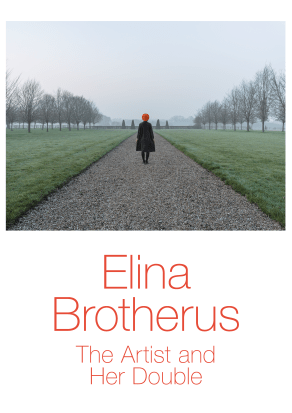
Elina Brotherus – The Artist and Her Double
Through their rigorous compositions and sensitive use of light, the photographs of Elina Brotherus often evoke painting. She frequently revisits the motif of the Rückenfigur – the figure seen from behind – well known in the history of art, inviting the viewer to enter the image and share the gaze directed towards a landscape or an interior space. This reference recalls, in particular, the landscapes of Caspar David Friedrich, whose visual language she reactivates through a distinctly contemporary approach.
Her settings are silent and often expansive landscapes, or minimalist interiors in which every element appears carefully considered. At the heart of these scenes is the artist herself.
Brotherus stages herself in her own photographs, simultaneously occupying the roles of model and photographer. The recurring presence of the remote shutter release humorously emphasises this dual position: she is both in front of and behind the camera, both performer and director of her own photographic tableaux.
Although Brotherus works alone in front of the camera, her photographs also belong to the realm of performance. Each image is the result of an action, a pose, or a carefully devised protocol carried out specifically for the camera. Her body becomes simultaneously the subject, the tool, and the medium of the work, while the photograph preserves the trace of an ephemeral performative act rather than merely recording a scene.
Her work is sustained by a constant dialogue with art history. Several series take as their point of departure major figures such as John Baldessari, Joseph Beuys, Caspar David Friedrich, or Luigi Ghirri. These references are not simple tributes: Brotherus appropriates their works, gestures, and postures to explore questions of transmission, quotation, and artistic influence. Baldessari’s conceptual strategies, Beuys’ performative dimension, Friedrich’s contemplative Romanticism, and Ghirri’s poetic attention to the ordinary landscape all become materials that she reinterprets through her own photographic language.
This reflection extends to her engagement with artistic education. She has developed several projects in art academies in collaboration with life-drawing classes (Artist and Her Model, The New Painting, among others), in which she stages the relationship between the model, the students, and the history of art. This immersion in the academic studio feeds a broader reflection on the relationship between painting and photography. The posing sessions, the presence of the model, the construction of the composition, and the training of the eye all refer to a centuries-old pictorial tradition that Brotherus reactivates through the photographic medium. Her images suggest not simply a lineage but a continuity: they propose that photography has itself become a space in which enduring questions of representation, presence, temporality, and image-making – long central to the history of painting – continue to be explored.
Within this deliberately restrained and at times almost austere aesthetic, emerge melancholy, emotion, and a quiet warmth. Yet Brotherus’ work is never devoid of lightness: her photographs play with the conventions of self-portraiture, the codes of photography, and references to art history, which she quotes, subverts, and reinterprets with subtle humour.
Balancing contemplation and self-mockery, her photographs create a space in which viewers can project their own associations and identify with the solitary figure looking at the world. In the viewer’s gaze, the artist and her double find a final echo, as the viewer, in turn, becomes the double of this silent presence.
Claire & Paul di Felice, curators